
Before we get into today’s topic, I wanted to take a moment and say thank you to everyone who subscribed to Spitfire News this year. Your support has blown me away and made my independent journalism possible so far. I can’t wait to deliver you all even more reporting and analysis in 2026. Onwards and upwards!
On Christmas Day, a wannabe cryptocurrency influencer tried out a new strategy to get people’s attention. “Using AI to put yourself on Epstein’s jet goes so hard,” he wrote in a post on X, accompanied by screenshots of young white men doing exactly that. They used newly released images of Jeffrey Epstein, the deceased sex trafficker and financier, from the “Epstein Files,” which are tens of thousands of heavily-redacted documents released by the Department of Justice this month. The original pictures showed Epstein on a private plane with Noam Chomsky, the famous linguist and philosopher. Using artificial intelligence tools, these men had inserted pictures of themselves into the images in Chomsky’s place. One of these young men appears to be an aspiring Soundcloud rapper. The other flexes cars, watches, and guns on Instagram.
They all got the attention they wanted in the form of millions of views on X, accrued before the crypto poster’s account was suspended. In a follow-up post, he had attempted to leverage the engagement to get people to buy a memecoin, which is a common pump-and-dump scam. He also included a suggested prompt to feed into an AI tool, so people could make their own fake Epstein Files cameos.

A screenshot of the viral tweet featuring young men inserted into pictures with Jeffrey Epstein using AI tools. I have blurred their faces and the X poster to avoid giving them more of the notoriety they crave.
A lot of the reactions to these posts were outraged, but not all. Some people just thought they were funny. In the days following the release of new documents related to Epstein, a wave of inappropriate jokes, memes, and engagement bait about the trafficker and his crimes has swept the internet. I’ve seen AI videos of Epstein with AI Charlie Kirk, the slain conservative influencer. I’ve seen posters make cheap jokes at the expense of Epstein’s many victims. I’ve watched as most of the focus around this case is spent on sensationalizing the high-profile perpetrators and accomplices to Epstein’s crimes—few of whom have actually been held accountable—while far less attention is paid to the survivors who have to live with the consequences of these vast injustices. In fact, many of these women have been smeared as willing participants in the heinous acts of abuse committed against them.
“So much of this has become online currency, and people are sharing without any regard or respect for how these are real people. Real lives have been damaged and lost, and it’s going to continue to have an impact on not only those victims, but society at large,” said Lauren Weingarten, a survivor, victim advocate, and trauma support specialist. She has previously consulted with the University of Washington’s Center for an Informed Public on research surrounding the online discourse of abuse, trauma, and its impact on survivors. (We’ve also collaborated on Survivor Stories Deserve Better, a call for a standard of care in media storytelling about these kinds of cases.)
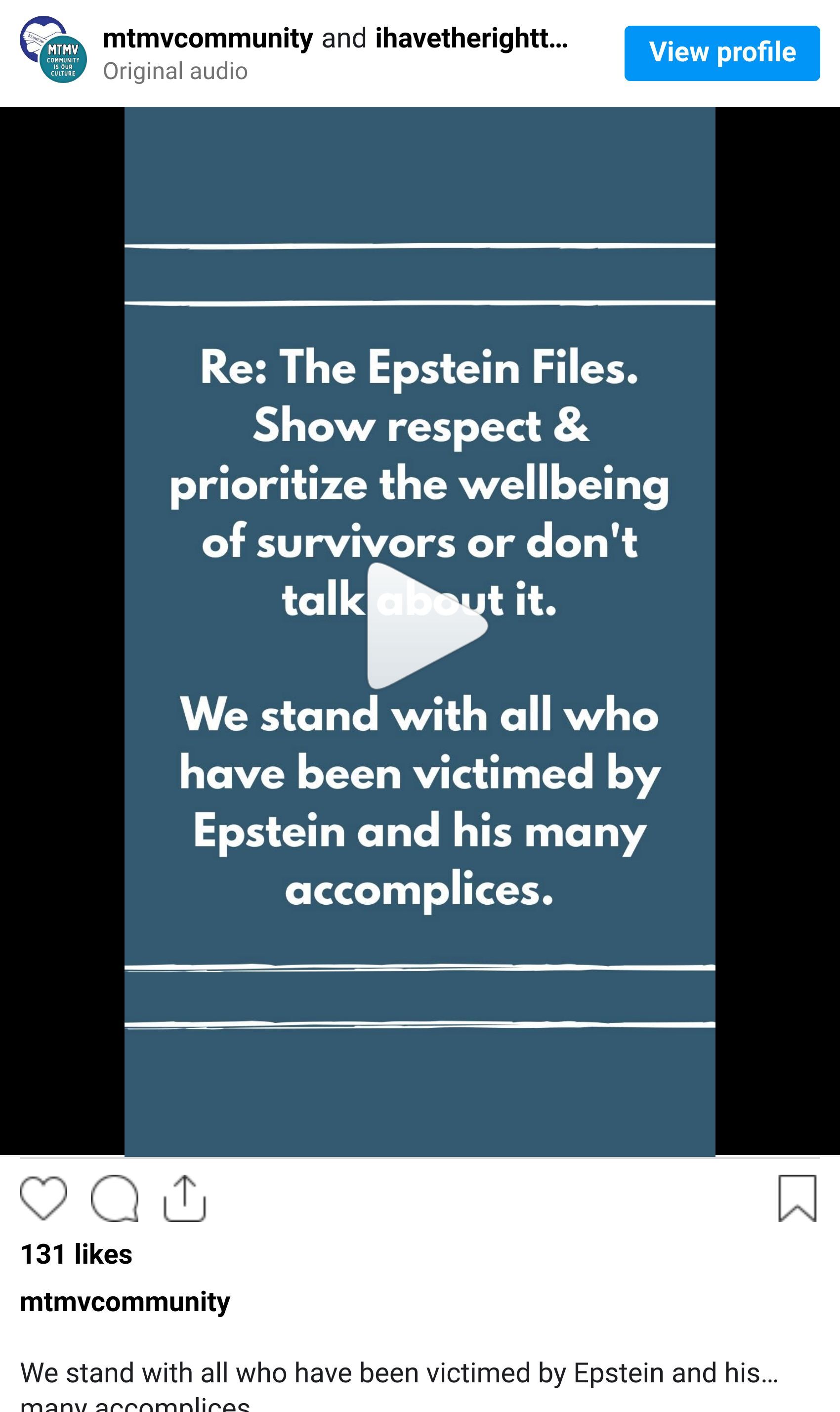
As Weingarten pointed out, the way people talk about the Epstein Files online affects the individuals who were directly victimized by him, as well as the broader community of survivors. Being abused is isolating, but the issue of abuse is not an isolated one—it’s a public health crisis that affects everybody. And many Epstein survivors are speaking out in an online ecosystem where their voices have yet again been silenced and overlooked in favor of individuals who possess more systemic power.
“There’s no separate internet. They’re seeing this as well,” Weingarten continued. “These memes weaponize and normalize the acceptance of sexualized child abuse. Those who abuse power aren’t just grooming their victims, they’re grooming their communities at large.”
Posts about the Epstein case that rely on humor or shock value to get traction may not seem like a big deal, but they ultimately benefit perpetrators like him. As I’ve watched people discuss the case online, many treat Epstein and his associates as singular and unique kinds of abusers, due to their wealth and position in elite society. But abuse is commonplace, and the potential for abuse exists in every power dynamic. The way we talk about Epstein in casual settings like social media can have an outsized effect on how we respond to abusive dynamics everywhere. It obfuscates the severity of these crimes and displaces our collective energy and attention, creating the kind of abuse culture where Epstein was able to flaunt what he was doing and get away with it.
Instead of centering the now-viral images of Epstein and his associates in these files, we would ideally center the voices of the individuals who were harmed by him. Many of these women were instrumental in the efforts to release the files and make the public aware of the corruption and violence at the heart of the case—and many of them are currently fighting for more transparency, education, and change. You can follow Jess Michaels, who recently highlighted how Epstein abused adults in addition to children. You can listen to From Now On with Lisa Phillips, a podcast that centers survivors to dive deeper into the complexities of abusive dynamics. You can follow World Without Exploitation, a survivor organization that condemned the “overly redacted, selective release” of the Epstein Files. And you can read testimonies like Nobody’s Girl, Virginia Roberts Giuffre’s memoir of surviving Epstein’s abuse. Giuffre died by suicide in April. These are just a few of the public-facing individuals and groups who have worked to hold Epstein and other abuse perpetrators accountable.

Annie Farmer, victim of convicted sex offender Jeffrey Epstein, speaks from the podium during a candlelight vigil to honor survivors of his crimes in Washington, DC on November 18, 2025. (Photo by DANIEL HEUER / AFP) (Photo by DANIEL HEUER/AFP via Getty Images)
“Online communities can be such a vital, wonderful space, especially for survivors,” Weingarten said. “There’s this idea that it has to be sensationalized, when raw, authentic storytelling that speaks to the realities of abuse and trauma is, sadly, so riveting on its own.”
Early on in my career reporting on sexual violence, I had a conversation with a source that stuck with me. He had been assaulted in a club by an individual who went on to become a famous influencer. Every time he saw the perpetrator’s face in an advertisement or on social media, it brought him back to that night. There are a lot of memes featuring this influencer that I might have otherwise shared if it weren’t for that conversation. Even though the influencer is widely disliked, and most of the memes are mocking him, it would still have the same effect on his many victims to see his face when they aren’t expecting it. I believe we have a responsibility to survivors in our online communities, which includes a lot more people than we realize. It’s just not worth it to create levity at their expense. To actually address the crisis of abuse, it starts with taking that abuse seriously.
