
Yesterday, I uploaded my first-ever long-form YouTube video to my own channel. I did briefly have an ASMR channel called Kat Whispers in college, but we don’t have time to get into that today. Anyways, my new video is a deep dive into the misogynistic treatment of Britney Spears from her early childhood into today, featuring my good friend and frequent collaborator Matt Bernstein.
The past 24 hours since have been quite the whirlwind. Lots of views, lots of subscribers, and the video is currently the no. 20 most-”hyped” on YouTube, whatever that means. (It’s a newish leaderboard feature for emerging creators.) I didn’t expect all the love so quickly, and I’m super grateful!
You also don’t have to worry about me going anywhere. Writing will always be my first love, and I’ll continue publishing the newsletter at my regular pace. But I did want to expand, especially because so much of the world gets its news through mediums like YouTube videos. If you’re interested in that, please feel free to subscribe and follow along!
I also have some exciting upcoming events to share:
If you’re anywhere near Brooklyn, I’m participating in an upcoming Club Internet live show on Wednesday, August 19 about whether cancel culture exists. I’m arguing that it does—specifically for Amber Heard. Get your tickets now!
A little later this month, I’m also co-hosting a virtual workshop on Wednesday, August 26 about survivor-informed journalism, specifically how to interview people about their traumatic experiences. This will be especially helpful to journalists, survivors, and anyone who works with survivors, and topics will include avoiding vicarious trauma and retraumatization. I hope to see you there!
Now onto the main topic I wanted to discuss today, one that has kept the internet roiling over the past few weeks. Is it sexist to dislike influencers? Are you a misogynist if you think influencers should be banned from certain spaces?
A few weeks ago, a local shopkeeper in Nantucket hung up a sign in his artisanal craft store that read “No influencers.” As you might expect, it caused quite a stir among the travel and lifestyle creators who have turned aestheticizing their daily lives, documenting viral locales, and hawking trending products into a full-time job.
One such influencer, Paige Lorenze (who has since changed her name to Paige Paul after getting married last month), commented on the shop’s Instagram post of the sign: “If you call yourself a feminist but proudly put up a ‘No Influencers’ sign, it’s worth asking who you are attempting to delegitimize, and why…” She went on to explain that the influencer industry is dominated by women and that the sign constitutes mocking the way many women have gained economic independence via online community-building and direct marketing.
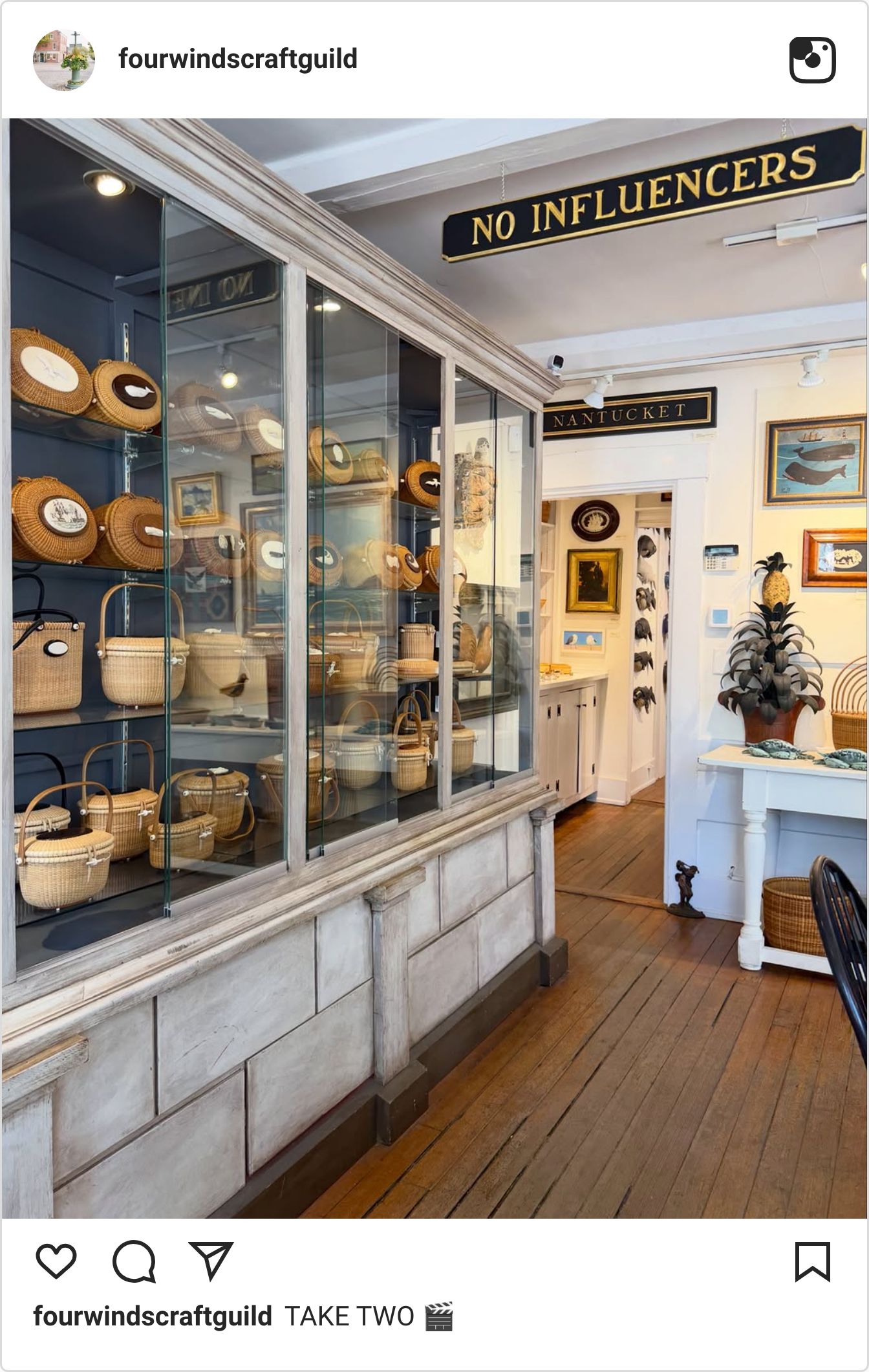
The “Nantucket influencer drama” has since snowballed into broader critiques of influencer culture and warring factions over whether it’s misogynistic to reject people filming in small businesses. There are a lot of layers to this, and yes, some of the attitudes emerging from the controversy are decidedly sexist. Now, with that being said, “No influencers” is not a form of discrimination akin to racism like some influencers were bold enough to say in the comments.
But my first impression when I heard about this dispute was that this is really a war over class.
The fact that this is happening in Nantucket was my first clue. Without painting every single person on the island with a broad brush, I do generally associate it and the tourism industry there with really rich people. The average home value on Nantucket is over $3 million. The local business that hung the “No influencers” sign sells $5,500 baskets. I’m not surprised they don’t rely on TikTok marketing to move their inventory. Their customers aren’t the same people scrolling for “Amazon essentials” or “designer dupes.” They’re curating an image of exclusivity for the 1%, not trying to appeal to the everywoman through an iPhone camera.
I suspect that “old money” versus “new money” attitudes are at least part of the disdain that Nantucket old-timers have for their newer, younger, influencer-friendly regulars. Tourism to the island has shot up dramatically alongside the advent of social media and travel influencing. Older vacationers openly reminisce in comment sections about the days when you didn’t need to make a dinner reservation; now, you’ll have to line up for a $40 lobster roll touted by all the foodies.
Historically, wealthy elites went to great lengths to blend in, fearing literal angry mobs. But online today, “stealth wealth” has been replaced by “aspirational” content of influencers eating Michelin-starred meals, camping out at the Ritz-Carlton, and posting endless carousels of their ultra-glamorous weddings—like Paul née Lorenze is doing right now. It’s no wonder her fellow Nantucket business owners (did I mention she has her own luxury clothing shop a 3-minute walk from the “No influencers” sign?) are salty about the way influencers flaunt their tax bracket. It’s the worst thing they can imagine: tacky.
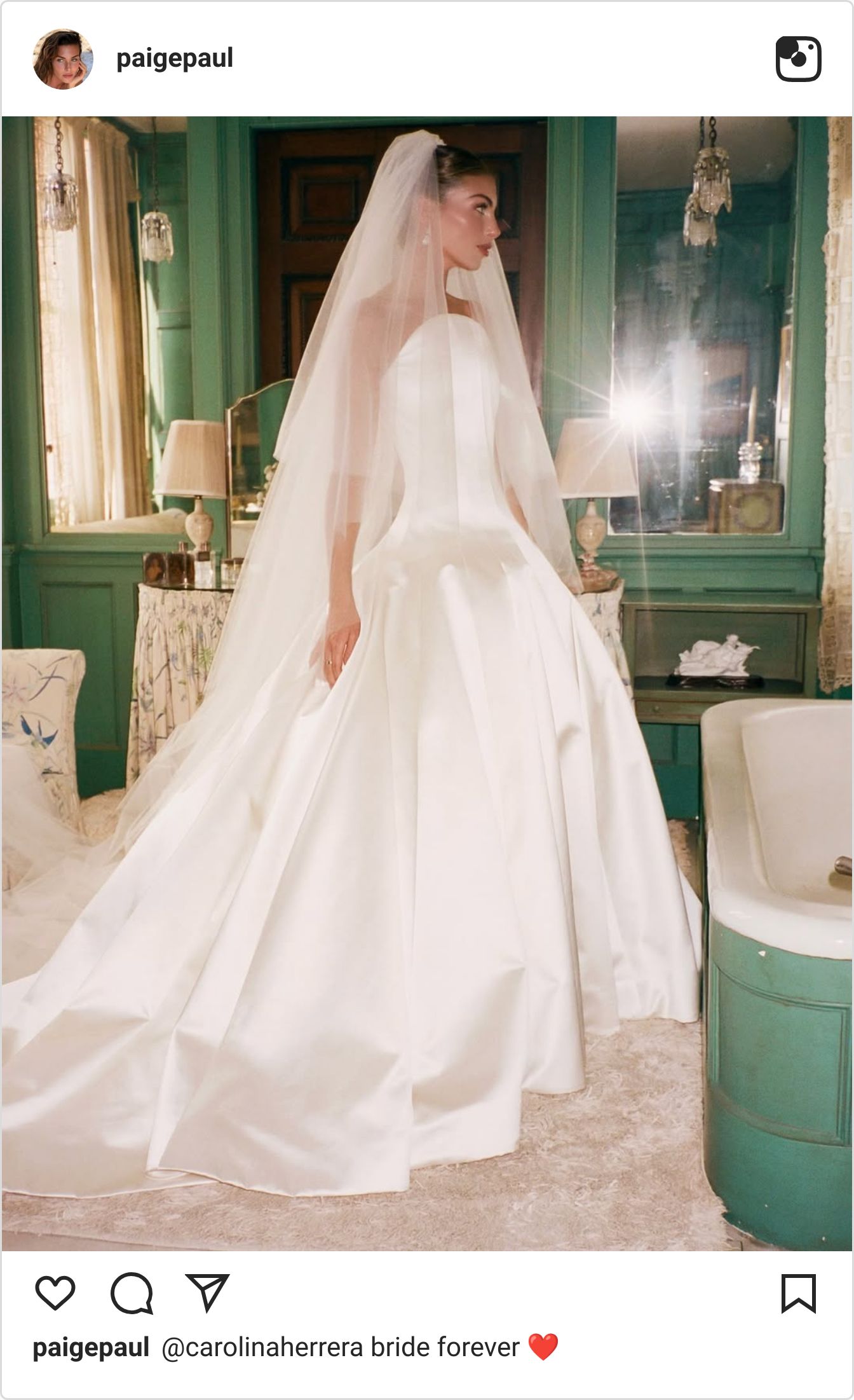
And in turn, I don’t think Paul’s motivation here is really rooted in feminism. To me, her comment reads more like: You inherited your Nantucket shop. I had to toil away in the content mines to get mine. So screw you for looking down on me.
In other words, this specific feud is about rich people problems. I know I’m not shopping for baskets that cost multiple months of my rent anytime soon. Nor am I shelling out $135 for rain boots that were made in China but sold in Paul’s pseudo-New England storefront. If I need new clothes or home goods, I’m not going to Nantucket’s Main Street. I’m going to T.J. Maxx.
And of course, neither Paul nor her Nantucket neighbor are going to come out and say any of this. Instead, she’s framing it as an issue of sexism and he’s telling reporters the sign is a response to antisocial filming etiquette. And sure, some content creators are obnoxious. Tourists in general often are, too. The level of filming in public, especially in high-tourism areas, has turned into a virtual panopticon. Nantucket isn’t the only place that has dealt with these issues. Last year, for WIRED’s UK print edition, I wrote an article about how TikTok has contributed to overtourism in Japan—shortly before I went to Japan for the first time with an itinerary that included multiple spots I found on Instagram Reels. I can’t even link to my overtourism article because it does not exist online (quaint!). But I heard plenty of horror stories about Westerners disrespecting locals and straining the infrastructure meant for the people who actually live there.
Some of the ire that has developed in the wake of Nantucket-gate is a response to the way social media has changed the fabric of travel and leisure for better and for worse. It’s easier than ever to get restaurant recommendations; it’s harder than ever to actually find a seat at those restaurants. I can also understand why the knee-jerk reaction of disdain has developed for influencers and influencer culture. It’s easy to blame all our societal woes on the most hyper-visible aspects of modernity and late-stage capitalism.
But notably, most viral travel tips don’t even come from full-time influencers. Most people who share their favorite spots on social media aren’t making any money at all, let alone the millions of dollars in sponsorships and ad revenue that people associate influencer culture with. These days, even having a big following doesn’t necessarily translate to a big income. (And while she has definitely built businesses off her 1.1 million Instagram followers, Paul also grew up going to an elite alpine ski boarding school, so I don’t attribute her lifestyle purely to influencing.)
Increasingly, people post online not because they expect to become fabulously wealthy, but because our digital-first economy necessitates an online presence for careers of all kinds. If you want to write a book, you better have a social media marketing plan. If you want to communicate any sort of message to a broad audience, you’ll find them via short-form—or long-form—video. Every company, politician, public service, and brand needs a social media team. And almost everyone needs a side gig, so have you tried starting a podcast? We are all kind of being forced into influencing just to get by. So when I see a rich business owner say “No influencers,” I kind of think, well, must be nice.

Nantucket, MA - June 30: The Nantucket Harbor Stop & Shop on June 30, 2026. (Photo by Christian Kantosky/The Boston Globe via Getty Images)
And this brings me to the misogyny argument, which I actually think holds more weight than a lot of Paul’s detractors do. To be clear, I don’t think Paul is an ardent feminist herself, considering that her only other political statement has been mourning Charlie Kirk. But it’s well-established that the term “influencer” is associated with women. That’s not because men don’t make social media content. They just refer to themselves using terms they view as more dignified: gamer, creator, videographer, YouTuber, etc. When you think “influencer,” what mental image does that conjure up? It’s probably a young woman, and you probably judge her a little bit for it.
Nowhere is this clearer in the Nantucket incident than in how Barstool Sports founder Dave Portnoy responded to it. He commented on the shop’s Instagram post and asked if he was considered an influencer, claimed he was not an influencer, then went on a longer rant about how influencers—including his own podcast co-host, who is a much younger woman—shouldn’t come to Nantucket and disturb locals. Which is rich coming from Portnoy, who is one of the OG influencers and was able to break Massachusetts real estate records by buying a $42 million Nantucket compound with the money he earned from influencing. In fact, Portnoy is the pinnacle of what people claim to be complaining about with influencers. He travels around to different pizza shops and films himself taste-testing slices. But since he’s a man, and a repulsive, abusive (which he denies), bigoted (which he also denies) man at that, people don’t have a problem with him filming in public places. He’s lauded for “saving businesses.” And it’s true—influencer attention saves and boosts businesses all the time!
There’s a massive, gendered double standard when it comes to influencing. I’ve had people derisively call me a wannabe influencer when they disagree with me. Many of my female journalist peers have experienced the same. Our male peers, however, receive glowing praise for making jokes online and starting TikTok accounts. I’ve recently sat on two journalism panels with men who are full-time influencers, and both of them said things that no woman would ever be able to get away with saying. One of them was one of the most popular news influencers out there (with more than 5 million TikTok followers), and he insisted that your physical appearance has nothing to do with your success online (he’s an average-looking white guy, of course). The other one, in response to a question about whether local businesses can suffer consequences as a result of influencers, claimed that only positive attention can stem from his content. He said local businesses should be universally grateful for influencers. Can you imagine if a woman said that?
Ultimately, it’s perfectly okay for a business to ban taking photos or videos inside. It’s even fine for a business owner to dislike influencers in general, although the guy who runs the Nantucket basket store now claims he isn’t even anti-influencer. And yeah, it’s just a jokey sign. But since this has turned into such a big discourse, it’s revealing more about people’s attitudes toward the “influencer” label and who they think falls under it. And unfortunately, some of those attitudes are pretty sexist.
